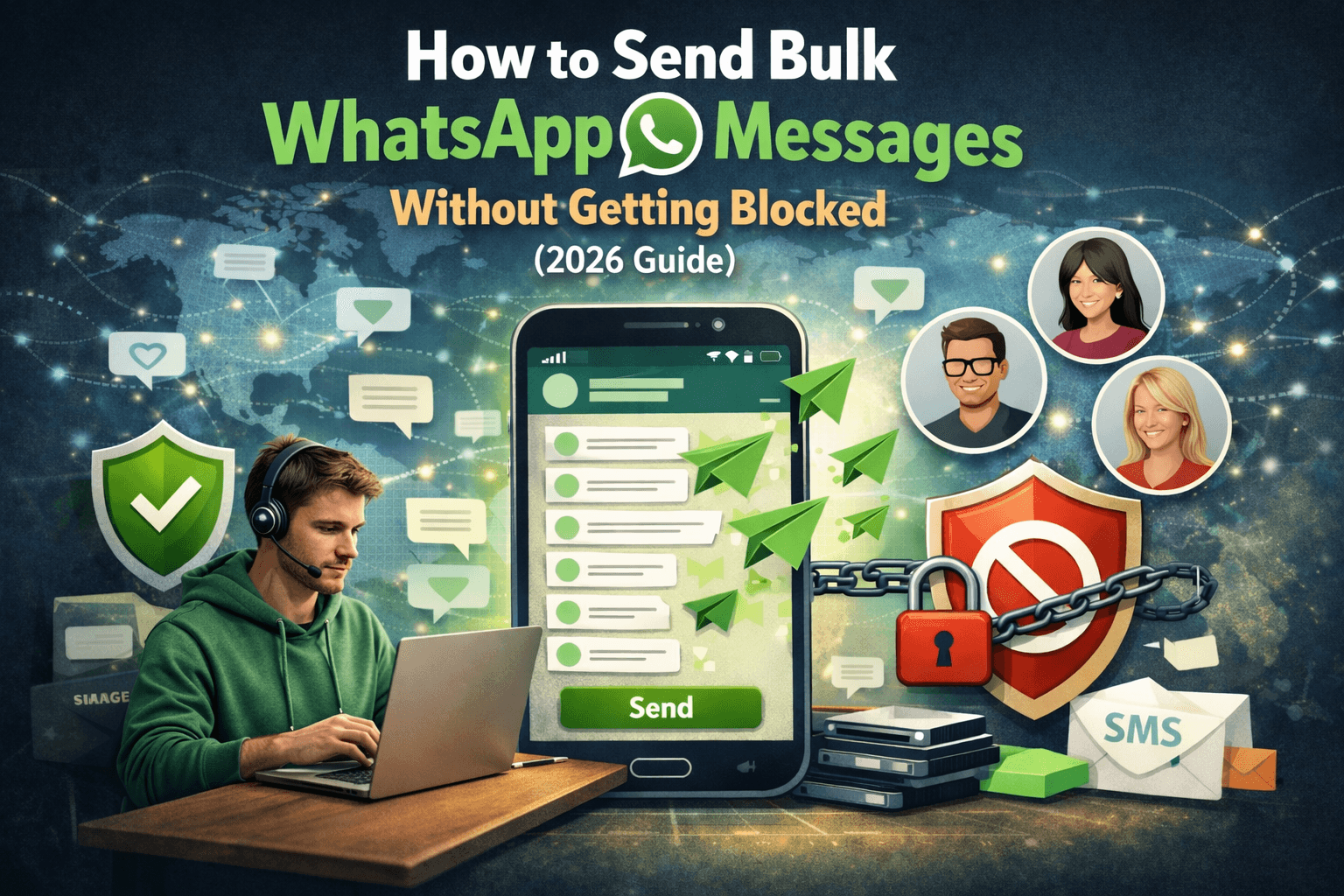
Sending messages to many customers on WhatsApp can be powerful for businesses. But if done incorrectly, accounts can quickly get restricted or blocked.
This guide explains how bulk WhatsApp messaging works in 2026, why accounts get blocked, and how businesses can safely send large numbers of messages without risking their number.
If you're planning campaigns or customer updates, this guide will help you avoid common mistakes.
Quick Summary
If you want the short version:
• Bulk messaging is allowed when done responsibly
• Personal WhatsApp accounts have strict limits
• Messaging unknown contacts increases blocking risk
• Businesses should use structured tools or official messaging platforms
• Automation tools help manage outreach safely
Keep reading for the detailed explanation and safe methods.
Why WhatsApp Blocks Bulk Messaging
WhatsApp is designed primarily for personal communication. When an account suddenly sends hundreds of similar messages, the system may treat it as spam.
Common reasons accounts get blocked include:
• Sending messages to people who never saved your number
• Sending the same message repeatedly
• High complaint or block rates
• Sending messages too quickly
• Using unofficial automation scripts
Because of these factors, many businesses struggle when they try to run campaigns using normal WhatsApp accounts.
WhatsApp Message Limits in 2026
While WhatsApp does not publish exact numbers publicly, there are practical limits businesses encounter.
Typical behavior limits include:
Personal WhatsApp
• Safe messaging: small groups of contacts
• Sudden mass messaging may trigger restrictions
Business Messaging Platforms
• Higher message capacity
• Structured message templates
• Better delivery reliability
If your business sends updates, promotions, or reminders, relying on a normal account can quickly become inefficient.
Safe Ways to Send Bulk WhatsApp Messages
There are several methods businesses use to safely send messages without risking blocks.
1. Send Messages Only to Opt-In Contacts
The safest approach is messaging people who have already agreed to receive updates.
Examples include:
• Customers who filled out a form
• Users who contacted your business first
• Newsletter or service subscribers
Messaging random numbers often leads to complaints and blocks.
2. Avoid Sending Identical Messages Repeatedly
Spam detection systems often look for repeated messages.
Instead of sending identical text to hundreds of users:
• Personalize messages when possible
• Space messages out over time
• Use different templates for different audiences
This reduces spam signals.
3. Warm Up New Numbers
New WhatsApp numbers that suddenly send many messages often get restricted.
Safer approach:
• Start with small conversations
• Increase volume gradually
• Maintain normal chat behavior
This helps the system trust the account.
4. Avoid Unofficial Bulk Messaging Scripts
Many websites offer bulk WhatsApp scripts or browser extensions.
These tools often violate WhatsApp policies and frequently lead to account bans.
Businesses that rely on messaging for communication should avoid these shortcuts.
When Businesses Need a Better Solution
As message volume increases, manual sending becomes difficult.
Common challenges businesses face:
• Managing hundreds of conversations
• Tracking campaign performance
• Sending updates to large contact lists
• Coordinating replies between multiple team members
At this stage, companies often switch to WhatsApp broadcast software for businesses or structured messaging platforms.
These tools help send messages safely while organizing conversations.
Businesses running WhatsApp campaigns also need visibility into which users actually engage with their messages.
Tools like click tracking for WhatsApp marketing help businesses see which links customers click, measure campaign performance, and identify high-intent leads. Platforms such as Chati provide built-in click tracking that shows exactly who clicked your message links and allows instant retargeting of engaged users. This helps businesses optimize campaigns and focus follow-ups on people who already showed interest.
Bulk Messaging for Customer Communication
Bulk messaging is often used for legitimate business communication such as:
• order confirmations
• appointment reminders
• product updates
• event notifications
• promotional campaigns
Industries using this approach include:
• e-commerce stores
• service providers
• travel agencies
• educational institutes
For example, many online stores use messaging automation to Boost E-commerce Sales with WhatsApp by sending order updates and promotional offers.
Managing Bulk WhatsApp Messages Efficiently
When businesses scale their messaging operations, they usually adopt tools that provide:
• contact management
• campaign scheduling
• analytics and delivery tracking
• multi-agent conversation handling
Instead of sending messages one by one, teams can manage communication from a centralized dashboard.
Many companies also combine messaging with other channels using an omnichannel live chat inbox to keep customer conversations organized across platforms.
Final Thoughts
Sending bulk WhatsApp messages can be effective for business communication, but doing it incorrectly can lead to restrictions or blocked numbers.
The safest approach is:
• message only opt-in contacts
• avoid spam-like behavior
• send messages responsibly
• use structured messaging tools as your business grows
For small teams, manual messaging may work initially. But as customer communication increases, WhatsApp automation and organized messaging platforms become essential.
Understanding these practices will help businesses communicate with customers at scale while keeping their WhatsApp accounts safe.