Real estate marketing has changed. Getting enquiries is no longer the only challenge for agents and property businesses. The bigger problem is what happens after a potential buyer sends an enquiry.
A prospect may ask about a property, receive a reply hours later, get one follow-up call, and then disappear. Another prospect may be interested but not ready to buy for another three months. Without consistent follow-up, these leads are easily forgotten.
This is where WhatsApp lead automation for real estate agents can make a significant difference.
Instead of relying entirely on salespeople to remember every enquiry, businesses can use WhatsApp automation to respond, qualify, nurture, and follow up with prospects throughout the buying journey.
Why Real Estate Leads Go Cold
Real estate is rarely an instant-purchase industry. A person searching for a property may need weeks or months to make a decision.
During that period, they might:
Compare multiple properties
Speak with several agents
Wait for financing approval
Discuss the purchase with family
Change their preferred location
Lose interest temporarily
Simply forget about the original enquiry
The problem becomes even bigger when an agent receives dozens or hundreds of enquiries from advertising campaigns.
Calling every lead manually isn't always practical.
This is why WhatsApp for Real Estate can become an important part of the lead management process.
Turning an Enquiry Into a Conversation
Suppose someone clicks a property advertisement and submits their contact information.
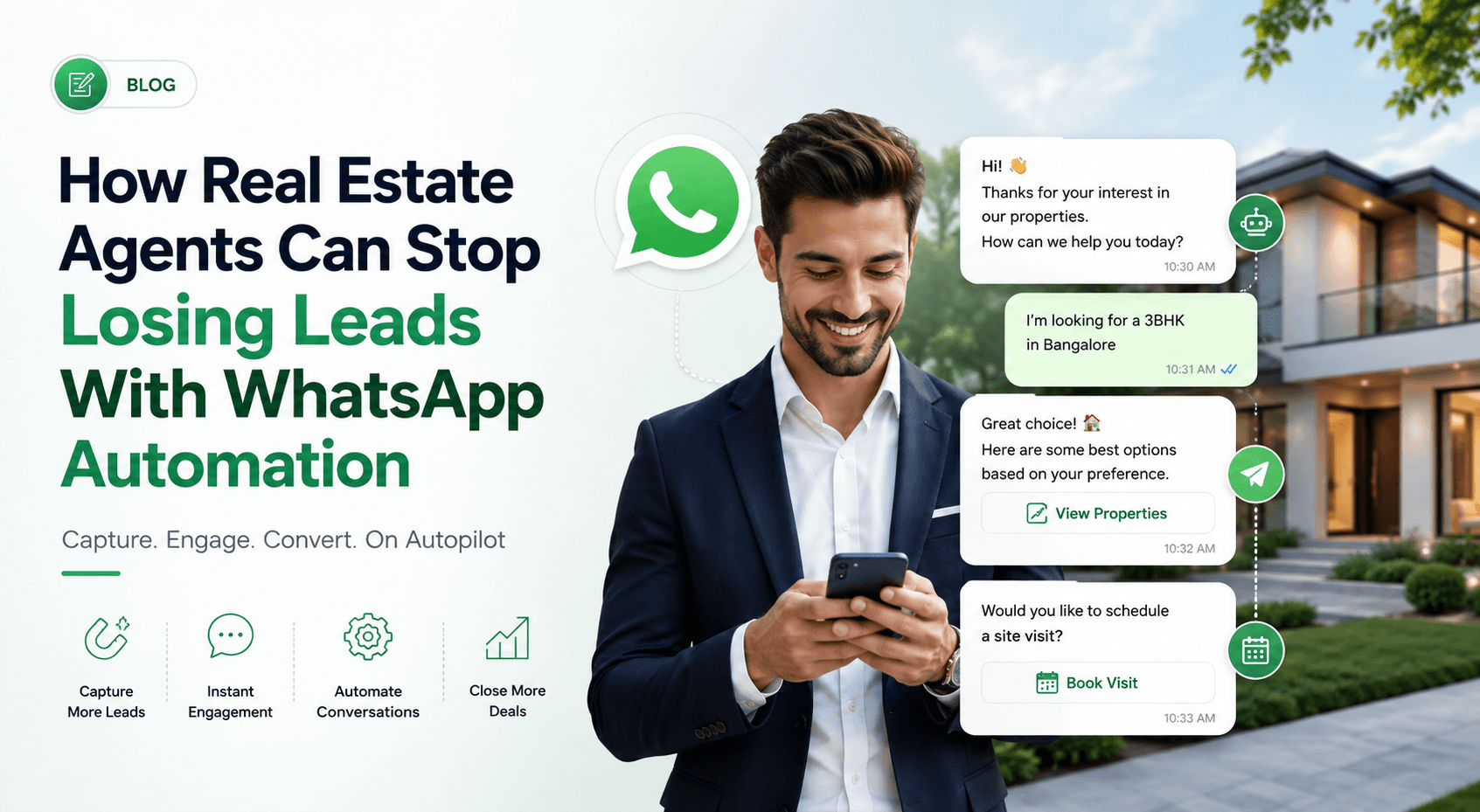
Instead of waiting for an agent to call, the business can trigger a WhatsApp conversation almost immediately.
The first message could ask simple questions such as:
What type of property are you looking for?
2 BHK
3 BHK
Villa
Commercial property
The next message could ask about budget, preferred location, and purchase timeline.
This creates a basic qualification process before the salesperson spends time on the lead.
A WhatsApp lead automation for real estate agents system can therefore help separate serious prospects from people who are only browsing.
Automated Follow-Up Without Spamming
One of the biggest advantages of automation is consistency.
Consider a prospect who enquires about an apartment but doesn't respond after the first conversation.
Instead of abandoning the lead, the system could send relevant follow-ups over time.
For example:
Day 1: Property details and brochure
Day 3: Ask whether the prospect would like similar properties
Day 7: Share another property within their budget
Day 14: Offer a site-visit appointment
Day 30: Send an update about new properties
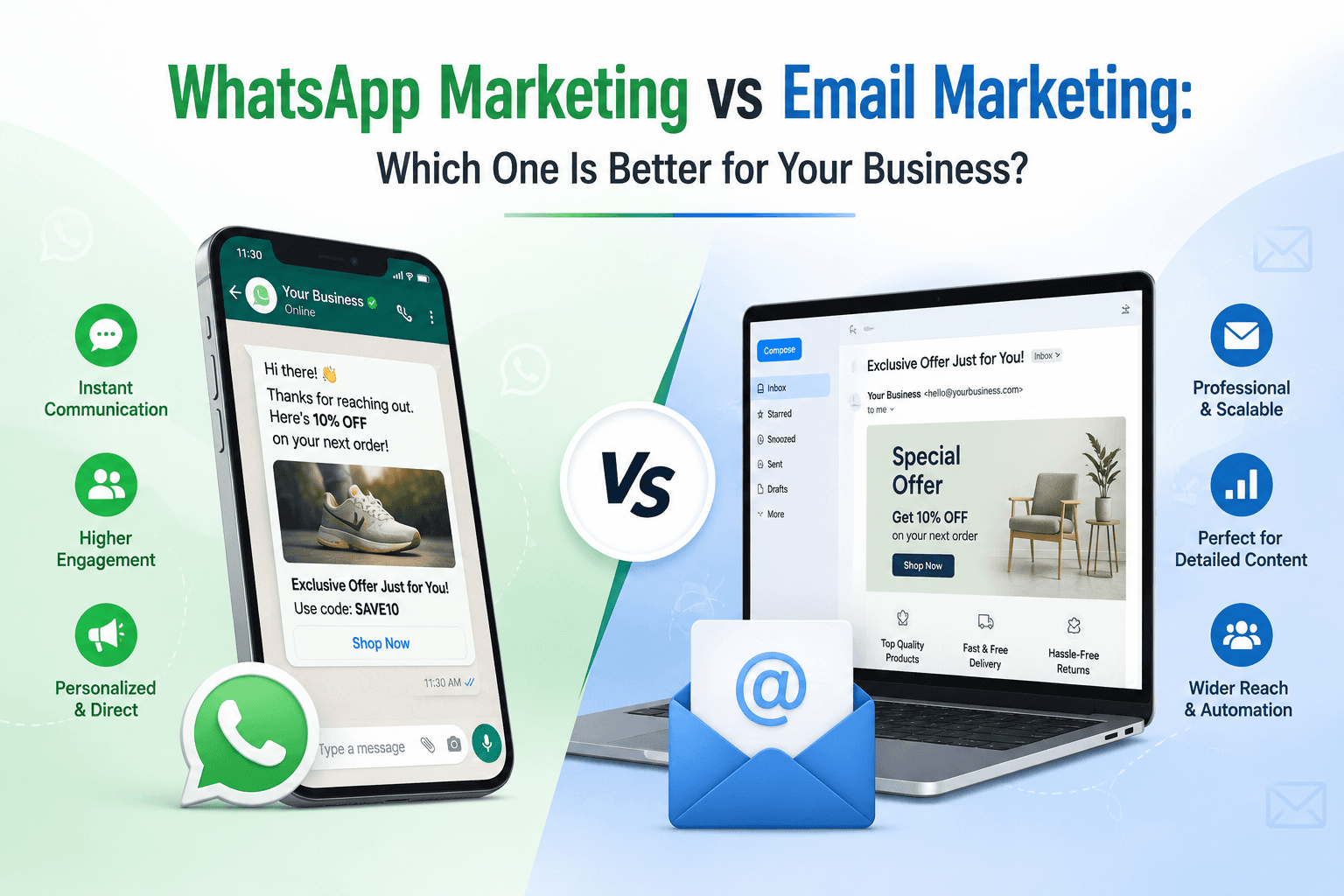
This can be implemented as a multi-channel drip campaign automation when WhatsApp needs to work alongside channels such as SMS or email.
The important point is that the messages should remain relevant. Automation shouldn't mean sending the same promotional message to everyone.
Personalised Property Recommendations
A good WhatsApp system can use information collected during the initial conversation.
For example:
Budget: ₹80 lakh
Location: Gurgaon
Property: 3 BHK
Timeline: 3–6 months
Instead of repeatedly sending generic advertisements, the business can use these preferences to send more relevant property recommendations.
This makes WhatsApp more than a messaging channel. It becomes part of the sales process.
For larger businesses, this information can also be connected with a customer data platform for marketing, CRM, or existing lead-management system.
What About Missed Messages?
Another common problem is that customers don't always message during business hours.
A prospect might send:
"Is this property still available?"
at 11:30 PM.
If nobody responds until the next morning, the prospect could already be talking to another agent.
A WhatsApp automation system can provide an immediate response, collect basic information, and let the prospect know when a salesperson will follow up.
For businesses with several salespeople, an omnichannel live chat inbox can also help teams manage conversations from multiple channels in one place.
This is particularly useful when enquiries are coming from WhatsApp, Instagram, Facebook, website chat, and other sources.
Site-Visit Reminders Can Recover Lost Opportunities
Getting someone to agree to a site visit is only half the job.
People forget appointments.
Automated WhatsApp reminders can help reduce this problem.
For example:
24 hours before:
"Your property visit is scheduled for tomorrow at 11 AM."
2 hours before:
"Just a reminder about today's property visit at 11 AM. Reply if you need to reschedule."
After the visit, another message can ask whether the buyer wants to see similar properties.
This creates a continuous communication loop rather than ending the conversation after the site visit.
Tracking Which Campaigns Generate Conversations
Another problem for real estate businesses is knowing which marketing campaigns actually generate useful leads.
Getting 1,000 clicks doesn't necessarily mean getting good prospects.
A WhatsApp click tracking tool can help businesses understand which campaigns generate WhatsApp interactions.
For example, an agency could compare:
Instagram property campaigns
Facebook advertisements
Google campaigns
Website buttons
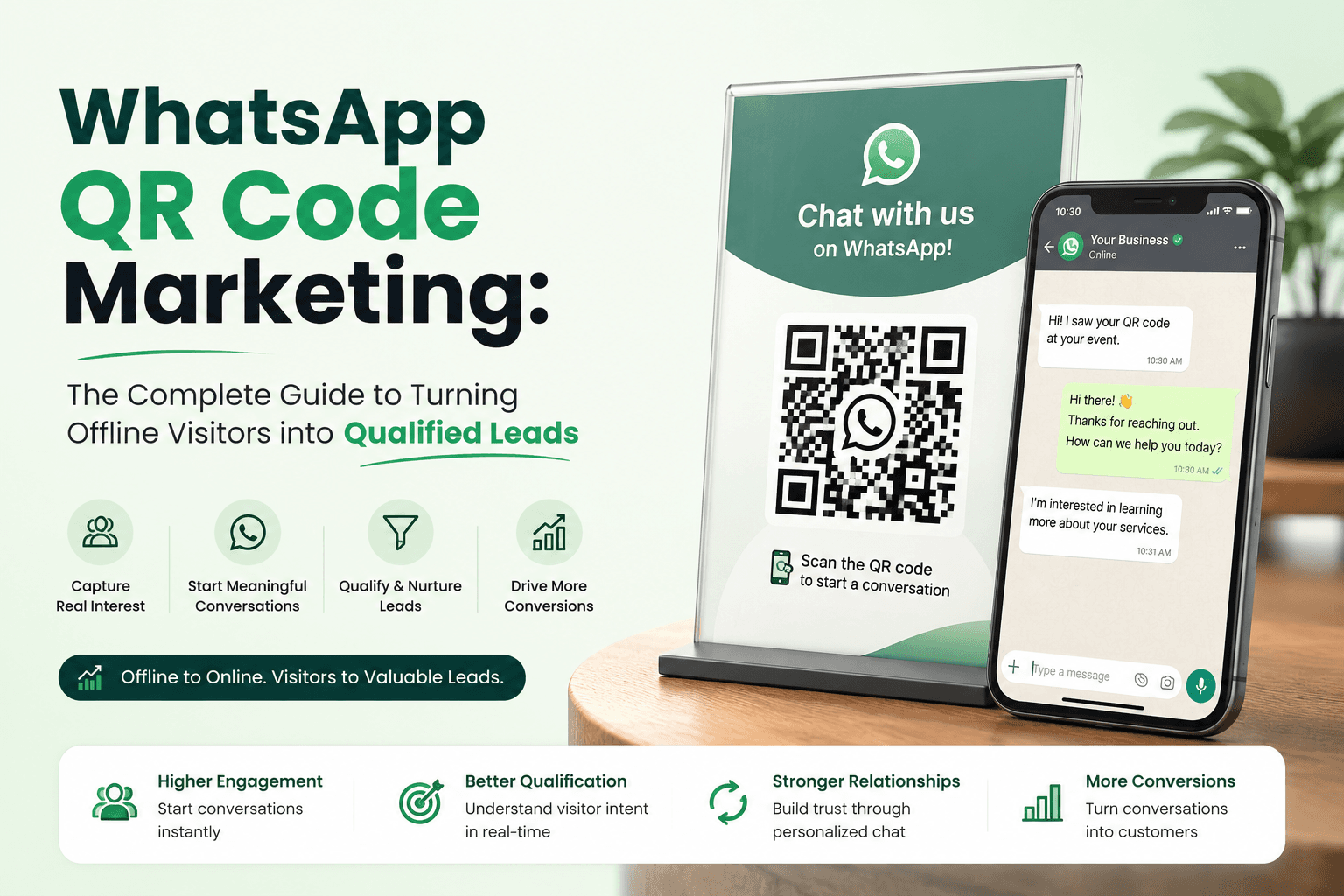
QR codes
Property listing pages
With proper WhatsApp campaign tracking, marketers can move beyond simply measuring clicks and start examining what happens after the click.
The more useful question becomes:
Which campaign produces conversations, qualified leads, site visits, and ultimately sales?
WhatsApp Should Not Replace the Sales Team
Automation doesn't mean eliminating salespeople.
In real estate, human interaction is still extremely important because purchasing property is a high-value and often emotional decision.
The better model is:
Automation handles repetitive communication → salesperson handles high-value conversations.
For example:
Automation handles
Initial responses
Basic qualification
Property brochures
FAQs
Appointment scheduling
Reminders
Follow-ups
Re-engagement
Salespeople handle
Negotiations
Complex questions
Property visits
Financing discussions
Closing
Relationship building
This allows sales teams to spend more time on conversations that actually require human involvement.
The Real Opportunity: Recovering Existing Leads
For many real estate businesses, the biggest opportunity isn't necessarily generating more leads.
It's getting more value from the leads they already have.
Imagine an agency has 5,000 old leads sitting inside a CRM.
Some may no longer be interested. But others may still be looking for a property.
A carefully designed WhatsApp reactivation campaign could identify people who are still interested and move them back into the sales pipeline.
That can potentially be far more economical than constantly paying for new leads.
Final Thoughts
Real estate businesses don't necessarily have a lead-generation problem. Many have a lead-management and follow-up problem.
WhatsApp can help bridge that gap by creating a system that responds quickly, qualifies prospects, follows up consistently, reminds buyers about appointments, and brings old leads back into the conversation.
The goal shouldn't be to send more WhatsApp messages.
The goal should be to lose fewer valuable leads.
For real estate businesses, that makes WhatsApp automation less of a messaging tool and more of a practical extension of the sales process.
If implemented properly, Real Estate automation with WhatsApp can connect advertising, lead qualification, follow-up, customer communication, and sales into one continuous journey.