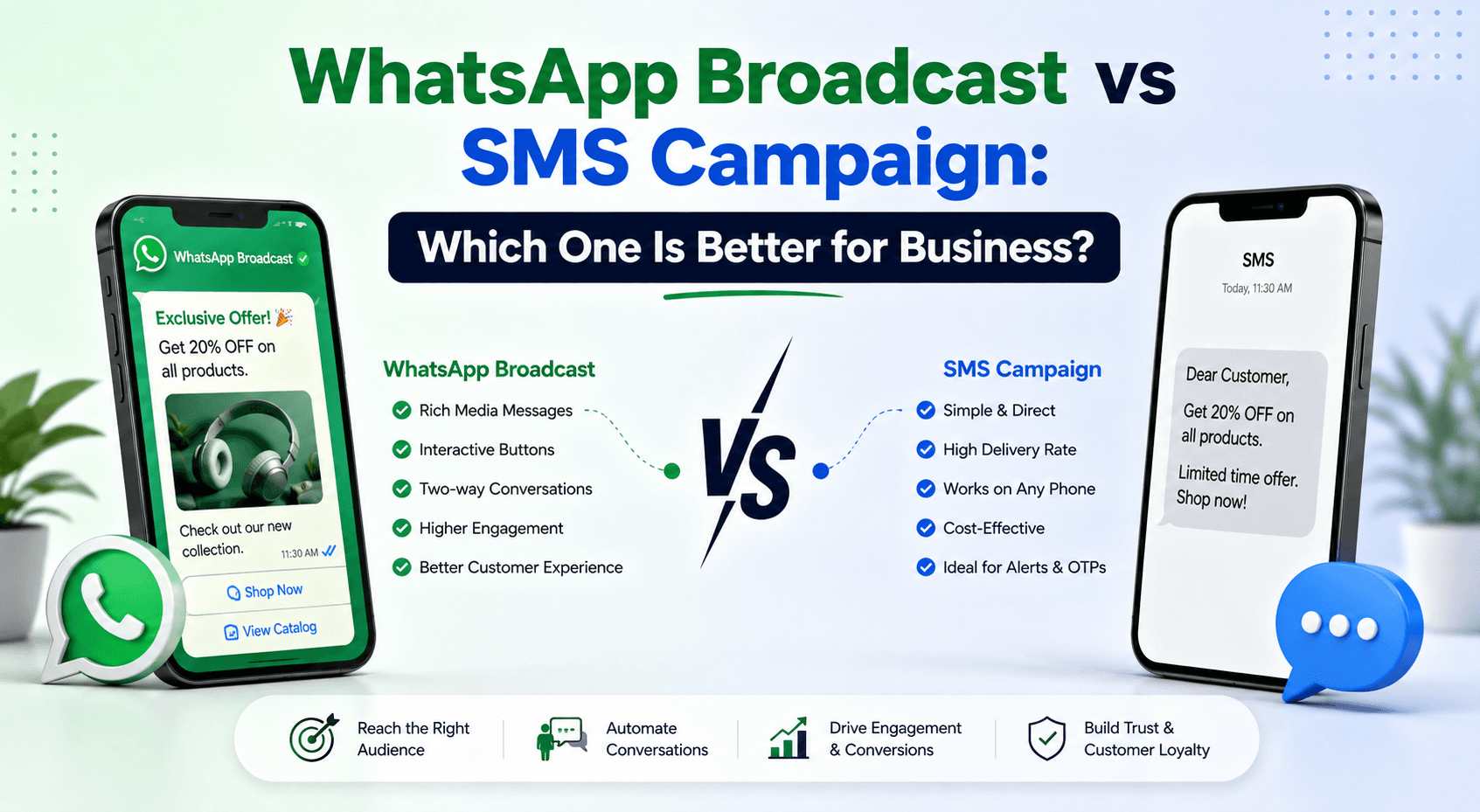
Businesses today communicate with customers across many channels, but very few offer the immediacy and familiarity of WhatsApp. For updates, reminders, promotions, or important announcements, WhatsApp has become the platform people check first. This is why WhatsApp broadcast software for businesses is increasingly used by companies of all sizes.
This guide explains what WhatsApp broadcast software is, how it works, when it’s useful, and what to consider before using it—without marketing hype or technical jargon.
What Is WhatsApp Broadcast Software?
WhatsApp broadcast software allows businesses to send a single message to multiple recipients at once, while keeping each conversation private. Every recipient receives the message as an individual chat, not as part of a group.
In simple terms:
One message
Many recipients
One-to-one experience
When used through a WhatsApp Broadcast Messaging Platform, broadcasts can be managed in a structured and compliant way, especially when sending messages to large audiences.
How WhatsApp Broadcasts Are Different from Groups
Many people confuse broadcasts with WhatsApp groups, but they serve very different purposes.
WhatsApp Groups
Everyone can see other members
Messages can become noisy
Not suitable for official communication
WhatsApp Broadcasts
Recipients don’t see each other
Replies come back privately
Clean and professional
For businesses, broadcasts are far more appropriate for announcements, updates, and outreach.
Why Businesses Use WhatsApp for Broadcast Messaging
1. People actually read the messages
Unlike emails that often sit unopened, WhatsApp messages are usually read within minutes. This makes broadcasts effective for time-sensitive communication.
2. Familiar and comfortable channel
Customers already use WhatsApp daily, so there’s no learning curve or extra app required.
3. More human than traditional bulk messages
Even when sent to thousands of users, a broadcast still feels like a direct message.
Common Use Cases for WhatsApp Broadcast Software
Business Announcements
Changes in working hours, new services, policy updates, or important notices can be shared quickly and clearly.
Promotions and Offers
Limited-time deals, seasonal offers, or product launches perform well on WhatsApp because messages are seen almost immediately.
Customer Updates
Order confirmations, service updates, or follow-up messages help keep customers informed without overwhelming them.
Education and Training
Institutes use broadcasts for schedule changes, event reminders, or general announcements.
Understanding WhatsApp Marketing Automation
Broadcasting becomes more useful when combined with WhatsApp Marketing Automation. Automation doesn’t mean spamming—it means sending the right message at the right time without manual effort.
Examples include:
Scheduling broadcasts in advance
Sending follow-ups only if a user doesn’t respond
Triggering messages based on actions (like form submissions)
This reduces repetitive work and ensures consistency in communication.
What Happens When Users Reply?
One important thing to understand is that WhatsApp broadcasts are not just one-way messages. When users reply, businesses need a way to manage those conversations.
This is where tools like shared inboxes or AI powered chatbots for businesses become helpful—not to replace humans, but to handle simple responses quickly.
For example:
Answering common questions
Sharing links or information
Collecting basic details before human follow-up
The goal is to make communication smoother, not automated for the sake of it.
Best Practices for WhatsApp Broadcast Messaging
Get clear user consent
Messages should only be sent to users who have opted in. This builds trust and avoids complaints.
Keep messages short and relevant
Long or frequent messages can feel intrusive. WhatsApp works best with concise, clear communication.
Don’t overuse broadcasts
Sending too many messages can lead to disengagement. Quality matters more than quantity.
Be clear about the purpose
Users should immediately understand why they received the message and what action (if any) is expected.
Compliance and Privacy Considerations
WhatsApp has strict rules for business messaging, especially when using the Business API. A proper WhatsApp Broadcast Messaging Platform helps ensure:
Messages follow approved templates
User data is handled securely
Messaging limits are respected
Ignoring these rules can lead to blocked numbers or loss of messaging access.
Is WhatsApp Broadcast Software Right for Every Business?
Not necessarily.
It works best when:
You already communicate with customers regularly
Your messages provide clear value
You respect user preferences and consent
It may not be ideal if:
Your audience isn’t active on WhatsApp
Messages are too frequent or generic
There’s no system to manage replies
Like any tool, its effectiveness depends on how thoughtfully it’s used.
Choosing the Right Platform
When evaluating a WhatsApp broadcast solution, businesses should focus on:
Ease of use
Compliance with WhatsApp policies
Ability to manage replies
Basic analytics and reporting
Support for future growth
Some businesses use platforms like Chati simply as a way to organize and manage WhatsApp communication more efficiently, rather than relying on manual messaging.
Final Thoughts
WhatsApp broadcast software for businesses is best seen as a communication tool, not just a marketing channel. When used responsibly, it helps businesses stay connected with customers in a way that feels direct, timely, and useful.
By focusing on relevance, consent, and clarity—and by using automation and chat tools only where they genuinely help—businesses can turn WhatsApp into a reliable and customer-friendly communication channel.